The Reading Nook Formula: How to Build One in Any Corner Without a Renovation
The 3-element formula for turning any awkward corner into a reading nook you'll actually use — japandi, dark academia, cottagecore, coastal grandmother covered.
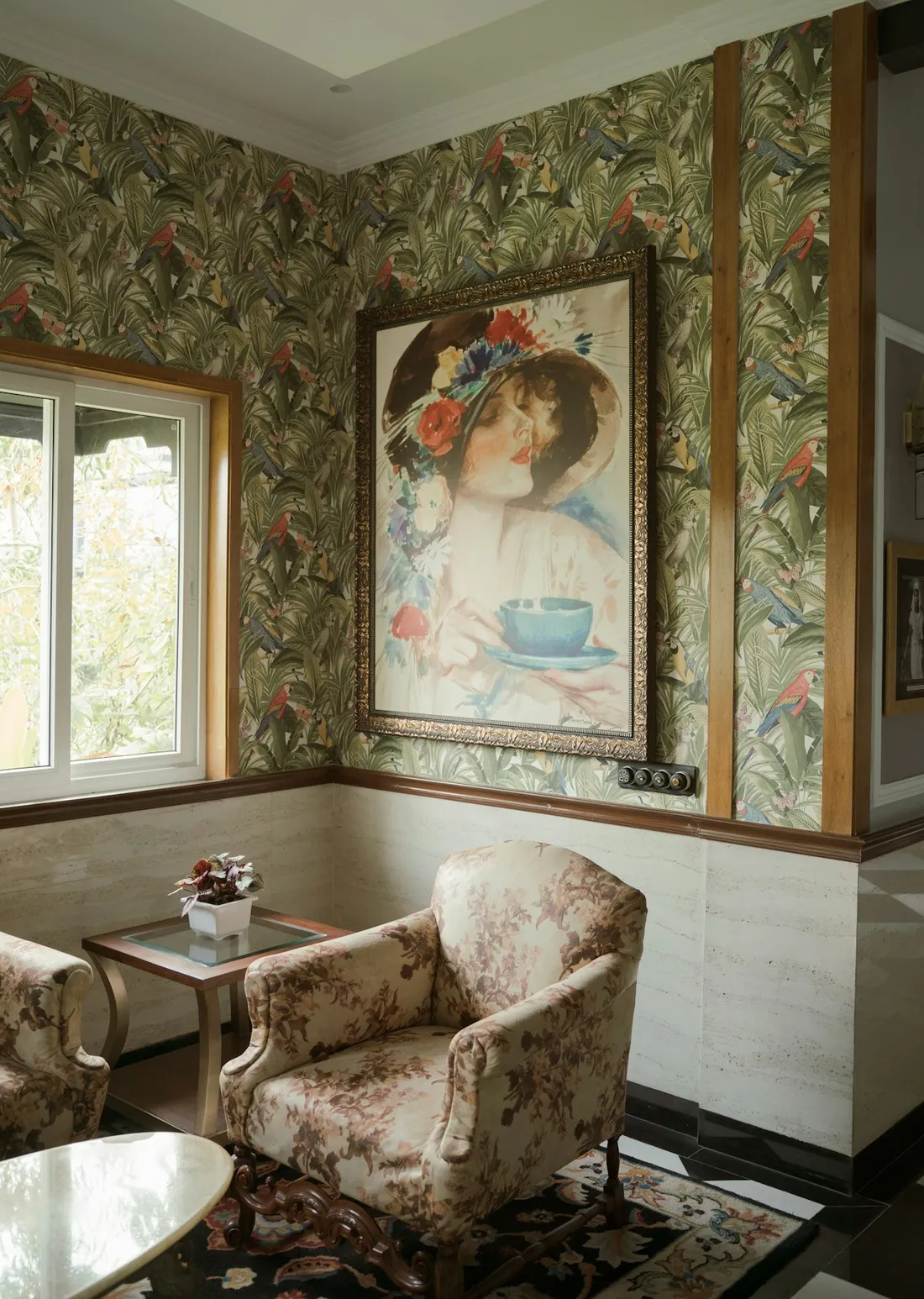
For three years, I had a 28-inch gap between a window and a bookshelf that collected shoes, mail, and a phone charger I kept losing under the pile. Twenty-eight inches. Not enough for a desk, not enough for another shelf, just enough to feel like wasted space every time I walked past it. Then I put an accent chair and a floor lamp in it on a Tuesday night, and it became the only corner of my apartment anyone actually wanted to sit in.
That’s the thing about reading nooks. You don’t need a bay window. You don’t need a built-in bookcase or a renovation budget. You need a corner you’ve been ignoring and about 15 minutes of rearranging.
Why Your Living Room Doesn’t Have a Reading Nook (And Why That’s on the Furniture, Not the Floor Plan)
Most reading nook tutorials aren’t really reading nook tutorials. They’re built-in bookcase tutorials. Custom millwork, window seats with hidden storage, shelves going floor to ceiling. The architecture does all the heavy lifting, and the “nook” part is just what happens when you toss a cushion on a ledge.
That’s fine if you own your home and have $5,000 for a carpenter. For the rest of us (hi, renter in a 1BR in Portland), it’s gorgeous photography disguised as useless advice.
The real reason most living rooms don’t have a reading nook isn’t the floor plan. It’s that furniture stores sell rooms as kits. Sofa, coffee table, media console, maybe a bookshelf. The living room “set” doesn’t include a reading corner because a reading corner can’t be sold as a three-piece bundle. So people fill their rooms the way the stores suggest, and every square inch goes to the TV-facing layout.
But look at the corners. The gap between the arm of the sofa and the wall. The dead zone behind the bedroom door. The end of the hallway that’s become a shoe graveyard. Those corners are too small for furniture sets. They’re the perfect size for a reading nook.
Containment is the whole point. The best reading nooks feel slightly enclosed. Not cramped, but bounded. You want to feel like you’re sitting in a pocket of the room, not floating in the middle of it. That 28-inch gap I ignored for three years? It worked because it was small. The bookshelf on one side and the window on the other created walls I didn’t have to build.
The Three-Element Rule: Chair, Light, Anchor
Every reading nook that actually gets used has exactly three elements: a chair, a light source, and a visual anchor. That’s it. That’s the formula.
The chair is where you sit. (Obviously.) But it also defines the footprint of the nook. It doesn’t have to be an armchair. A floor cushion works. A pouf works. I’ve seen a folded vintage quilt on a wide windowsill that worked beautifully. The point is: something that says “sit here.”
The light is task lighting, not ambient. A floor lamp or a wall-mounted reading light. Not the overhead fixture. (More on this in a minute.)
The anchor is the thing that visually separates the nook from the rest of the room. A small bookshelf. A plant on a stool. A stack of hardcovers on the floor. Even a small rug under the chair. It tells your eye, “This corner is different. This corner has a purpose.”
Here’s where people go wrong: they add a fourth element. Then a fifth. A side table. A tray for tea. A basket for blankets. A candle. Another plant. Suddenly the reading nook isn’t a reading nook. It’s a vignette. It looks beautiful in a photo and feels cluttered the moment you sit down. Three elements. If you’re agonizing over a fourth, you’ve already gone too far.
Corners That Already Work: Bay Windows, Stair Alcoves, and the Dead-End Hallway You’ve Been Ignoring
Stop scanning your room for where a reading nook could go. Start looking at the corners you’ve already written off.
The dead-end hallway. If your hallway has a terminus that isn’t a door, it’s a reading nook waiting to happen. A slim accent chair (look for anything 24 inches wide or less), a wall-mounted lamp so you don’t lose floor space, and a single shelf. Done.
Between furniture and walls. That 18-to-30-inch gap between your sofa and the wall? Between the dresser and the window? Measure it. If a chair fits, you have a nook. Mine was 28 inches. The IKEA STRANDMON wing chair is about 32 inches wide, which was too much. I ended up with a vintage slipper chair from Facebook Marketplace ($60, green velvet, slightly faded) that came in at exactly 23 inches. Perfect.
The bedroom corner behind the door. When the door is open, it hides this corner completely. When it’s closed, the corner appears. Put a chair there. It’s the most private reading spot in the house, and you’ve been storing a laundry basket in it. (If you’re working with a tight bedroom, I wrote a whole piece on making the most of small bedrooms that covers this kind of corner rescue.)
Under any window. Bay windows get all the credit, but a standard double-hung works just as well. You don’t need the window seat. You need the natural light. A low chair under a regular window with a floor lamp for after dark is the whole setup.
Four Styles, One Formula
The formula stays the same. Chair, light, anchor. What changes is the material palette and the shapes.
Japandi keeps it low and spare. A linen-upholstered accent chair close to the ground (the CB2 Sedo lounge chair at $499, or the IKEA KOARP at $249 if you’re keeping it tight). A paper-shade floor lamp like the Noguchi-style options on Amazon for around $75-90. Your anchor is a single low shelf with three books and a ceramic vessel. No symmetry. No fuss. My japandi guide goes deeper on material choices, but the reading nook version is the whole style distilled to its simplest form.
Cottagecore wants softness everywhere. A slipper chair or small overstuffed armchair in a floral or cream linen. The Target Threshold Emery accent chair runs about $280 and comes in a few prints that don’t look mass-produced. (A minor miracle at that price.) Pair it with a brass floor lamp with an aged-gold finish. Your anchor is a stack of hardcovers with visible spines, maybe a small vintage crate beside the chair holding a throw. Everything should feel a little worn in. If your blanket looks brand new, sit on it at the park for an afternoon first. I’m serious.
Dark academia goes moody. Leather or dark wool upholstery. The Christopher Knight Home Wayland tufted club chair on Amazon is around $260 and genuinely looks like it costs twice that. A brass pharmacy-style floor lamp with an adjustable arm and a warm bulb. The anchor here is always a bookshelf. Always. A small 2-to-3 shelf unit, wood or dark metal, packed with actual books. Not styled. Packed. The whole point of dark academia is that the space looks like someone reads there. Because someone does.
Coastal grandmother wants light, natural texture, and nothing that feels heavy. A slipcovered accent chair in white or oatmeal linen (the IKEA TULLSTA at $179 handles this, or the Pottery Barn slipcovered route if your budget stretches further). A rattan or whitewashed-wood floor lamp. The anchor is a woven seagrass basket holding a single throw and a small trailing pothos on a stool. Keep your palette to three colors max: cream, a soft blue, and one warm neutral.
The Lighting Problem Nobody Talks About
Your reading nook will fail if it’s lit by whatever overhead fixture is already in the room. Overhead light makes a corner feel like part of the room. Not separate. Not contained. The whole point of the nook is that it’s its own zone, and lighting is how you enforce that boundary.
You need a dedicated light source that only reaches the chair. A floor lamp with an opaque shade directing light downward, or a wall-mounted swing arm if your landlord allows a single screw hole (or you trust adhesive mounts). The bulb should be warm. 2700K. Nothing higher. A 3000K bulb in a reading nook feels like a dentist’s office, and 4000K feels like an interrogation. (My full lighting breakdown covers the science behind color temperature if you want the details.)
The placement that works best for reading: position the lamp slightly behind the chair, angled over the shoulder. You want light falling on the page (or the screen, no judgment) without hitting your eyes directly. The IKEA HEKTAR floor lamp ($69) does this well and comes in matte dark grey that disappears into most rooms. For something worth investing in, the Rejuvenation Eastmoreland ($349) is the one I’d buy if I were spending real money. It’s heavy. You pick it up and it feels like it was made by a person who cared about making a lamp, not a factory optimizing for a price point. The brushed brass finish ages beautifully over time.
That weight actually matters beyond durability. A heavy lamp base has a psychological anchoring effect on the corner. It makes the nook feel permanent, like someone decided this spot means something. A flimsy tripod lamp does the opposite. It reads as temporary. Your brain registers “this could be moved at any time,” and the nook never quite settles into the room.
Under You: The Seat Decision That Determines Whether You’ll Actually Stay
I’m going to say something that contradicts half the reading nook Pinterest boards out there: skip the rug. In a corner nook, a rug creates a tripping lip where it meets the rest of the floor. It bunches under chair legs. It collects dust in a space that’s hard to vacuum because, remember, it’s a corner. If your floors are cold, wear socks. If you need texture, choose a chair with textured upholstery.
The chair itself is the decision. Everything else follows from it.
If the chair isn’t comfortable for 45 minutes of sitting, the nook is decoration. Not a nook. You won’t use it. You’ll look at it from the couch while watching HGTV and think “I should read more,” and then you won’t, because the chair is pretty but your lower back starts hurting after ten pages.
Test chairs by sitting in them for at least five minutes in the store. Bring your phone and scroll through it, because that’s the posture you’ll actually be in. If the seat depth is more than 20 inches and you’re under 5’8”, your feet won’t touch the ground without sliding forward, and you’ll never get comfortable. The IKEA STRANDMON ($329) has a seat depth of about 19 inches, which works for most people. The padded wings on the sides also do something subtle: they block your peripheral vision, which makes the corner feel more enclosed. That’s not an accident. Wing chairs were literally designed for reading by a fire. The wings blocked drafts. Now they block distractions. Same idea, different century.
For very tight corners, the underrated option is a floor cushion. A large zabuton-style cushion (the kind used for meditation) runs $30-60 and takes up almost no visual space. Lean it against the wall with a back pillow behind you. Not glamorous. Extremely functional. You sink into the fabric, and the closeness to the ground changes how the corner feels around you. More enclosed. More yours.
Making It Stay a Reading Nook and Not Become a Laundry Chair Again
Every chair in a home is one lazy evening away from becoming a laundry chair. I know this because the accent chair in my reading nook held a pile of clean clothes for two weeks in January. Danny didn’t say anything about it, which is how I knew it was bad.
The trick isn’t discipline. It’s removing the conditions that invite clutter.
Don’t add a side table. A side table becomes a mail table, a keys table, an “I’ll deal with this later” table. If you need somewhere to set a mug, mount a narrow shelf at arm height. It holds a drink. It can’t hold a pile.
Don’t put a phone charger nearby. If your phone charges in the nook, you’ll sit there and scroll instead of read. Then the nook becomes a phone chair. Then it becomes a laundry chair. This is the natural lifecycle of unused furniture, and a charging cable is the first domino.
Keep exactly one throw blanket on it. One. Not folded artfully. Just tossed over the arm. It signals “this is for sitting” the same way a placemat signals “this is for eating.” Two blankets and the chair starts looking like storage.
Use it daily, even for five minutes. A reading nook that gets used stays a reading nook. One that gets admired becomes furniture. Sit in it with your morning coffee before you open your laptop. Read one page of something. The habit protects the space better than any organizational system.
The best reading nook I ever sat in was at my friend Sarah’s studio apartment. It was a $40 thrift store armchair wedged between a radiator and a window, with a clip-on book light clamped to the shelf above it. No rug. No side table. No styled accessories. Just a chair with a dent in the cushion from where she sat every single night. You could feel it when you sat down. The cushion had shaped itself to a person. The lamp was angled exactly right.
That’s what you’re building. Not a photo opportunity. A dent in a cushion.