Mother's Day Table Setting Ideas: Elegant Spring Entertaining She'll Actually Remember
A three-tier approach to setting a Mother's Day table — $80 to $400 — with Amazon picks for linens, chargers, and centerpieces that feel handpicked.
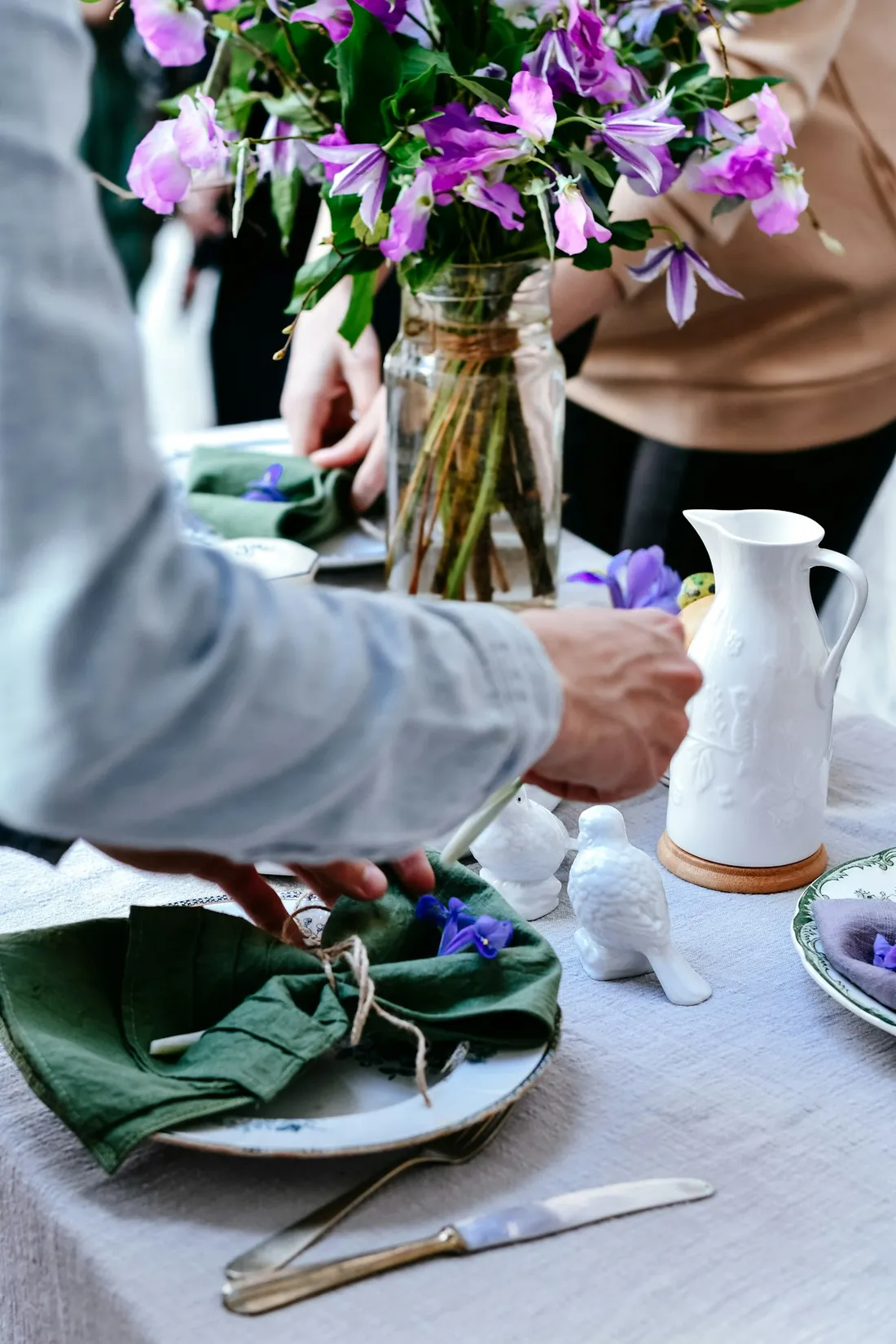
The first Mother’s Day table I set looked like a florist had sneezed onto a white tablecloth. Peonies in three different vessels. A runner I’d bought an hour before. Candles that didn’t match anything, including each other. It was pretty in the way things are pretty when you throw enough money at them. Nobody mentioned it once.
The second year, I used one low ceramic bowl filled with ranunculus and spent the rest of the budget on linen napkins. My mom asked where I’d bought the tablecloth. It was a $12 Amazon find. The whole setup cost less than that first bouquet had, and it’s the table she still brings up.
The Food Will Be Forgotten. The Table Won’t.
Here’s the thing about Mother’s Day brunch. Nobody remembers the frittata. They remember walking into a room and feeling like someone cared enough to think about it. That’s not about spending more. It’s about being deliberate with where the money goes.
Most Mother’s Day table guides will have you spending 60-70% of your budget on flowers. Flowers that will be brown and wilting by Wednesday. I’m not anti-flower (we’ll get there). But if you’re working with a real budget, and most of us are, the flowers shouldn’t be the main character. They should support a table that already looks good without them.
The pieces that actually stick around after Sunday? Linen napkins. A set of chargers you’ll reuse in June. A cloth runner that transitions straight into summer entertaining. A ceramic bowl you’ll fill with lemons in July. Those are your investments. The flowers are the finishing touch, not the foundation.
Start With One Anchor Piece
Every table I’ve set that actually worked started with one piece I loved. Not a color scheme. Not a Pinterest board. One physical object I could hold in my hands.
For spring entertaining, that anchor is usually a centerpiece vessel. A low, wide bowl. A vintage pitcher. A simple ceramic vase with proportions that feel right. Whatever it is, it sets the color temperature, the formality level, and the mood for everything else on the table.
My anchor piece right now is a matte stoneware bowl I found at a vintage shop in Sellwood for $18. It’s cream with a slight warmth to it, about 10 inches across and maybe 4 inches deep. I’ve used it for ranunculus, for garden roses, for just a pile of Meyer lemons when company wasn’t coming. It works every time because it doesn’t compete with anything.
If you don’t have a piece like that, here’s where I’d start:
- The Hearth & Hand stoneware serving bowl from Target ($15) works beautifully as a low centerpiece vessel. Grab cream or sage.
- CB2’s Vela low bowl ($30) in white or terracotta has excellent proportions for a table center.
- For something you’ll keep through every move and every apartment, Farmhouse Pottery’s Windrow Bowl ($85) is handmade in Vermont and gets more beautiful with use.
Once you’ve got your anchor, every other decision gets easier. The napkin color responds to the bowl. The candle height stays below the flowers. The chargers match the warmth level. One piece, and the rest follows. I wrote about this approach more in our spring tablescape guide, if you want the full framework for building outward from a single starting point.
Why Linens Are the Highest-ROI Swap on Any Table
I used to skip linens entirely. Paper napkins, a bare table, maybe a cheap polyester runner I’d shove in a drawer afterward. The table always looked fine. Never good.
Then I bought a set of real linen napkins. Actual linen, not linen-look polyester. And the difference was immediate. Not just visual, either. The weight of them when you pick one up. The slight roughness of the weave under your fingertips. Your brain registers that texture as “someone cared about this” before you’ve consciously noticed anything. It’s the same reason a cloth napkin at a restaurant signals a different experience than a paper one. You feel it before you think about it.
Here’s what I’d invest in, ordered by impact:
Napkins first. A set of 6 linen napkins in a warm neutral or muted spring tone will change your table more than any centerpiece. The wrinkles are fine. Honestly, they’re better than fine. Pressed linen looks uptight. Slightly rumpled linen looks like a long French lunch on a Saturday afternoon. I use mine year-round.
A runner or tablecloth second. Not both. A runner on a nice wood table. A tablecloth if your table surface isn’t worth showing. The $12 Amazon cotton tablecloth I mentioned? It’s the Solino Home 100% Pure Linen. The quality at that price makes no sense. I’ve washed it maybe twenty times and it just keeps getting softer.
Cloth placemats third, but only if you’re skipping chargers. They serve the same function of framing each setting, and doubling up always looks fussy.
What’s the Right Budget for This, Actually?
I get this question a lot, and the honest answer is: less than you think, more than the dollar store, and wildly different depending on what you already own.
If you’re starting from scratch with no linens, no decent plates, and no centerpiece vessel, $80 will get you a table that looks genuinely beautiful. Not “good for the price.” Beautiful. I’ll break this down piece by piece in the budget tiers below.
If you have basics and want to level up, $180 gets you into real linen territory with a centerpiece that could anchor a dinner party table straight through fall.
And $400? That’s the “I want to buy things I’ll use for years” tier. Pieces you’d bring to your next apartment. Pieces that age well because the materials are real.
One thing I’d push back on: don’t spend more than 25% of your total budget on flowers. I know that sounds harsh for Mother’s Day. But I’ve seen too many tables where someone dropped $60 on a gorgeous arrangement and then served it on mismatched plates with plastic cups. The arrangement looked incredible. The table looked confused. Budget the permanent stuff first. Flowers fill the gaps.
Grocery Store Flowers That Look Like a Florist Made Them
Look, I love a $75 florist arrangement. I also love paying rent. These two desires occasionally conflict.
The good news: grocery store flowers can look shockingly good if you follow three rules.
Buy one variety, not a mixed bouquet. Those pre-made bundles are fine for a kitchen counter, but for a table setting, a single variety reads as intentional. Twelve stems of white ranunculus. A dozen blush carnations. (Yes, carnations. They’ve been unfairly dismissed for decades. A tight bunch of white carnations in a ceramic pitcher looks incredible, and they last over a week.) Eight stems of chamomile. One type, one color family. That’s it.
Cut them short. Most people leave grocery store flowers at full stem height, which means your centerpiece blocks eye contact across the table. Cut the stems so the arrangement sits below chin level for a seated person. For most bowls and vases, that means 6-8 inches of stem, maximum. It feels wrong while you’re cutting. The result looks right.
Strip out the filler. Ditch the cellophane, the random greenery, and especially the baby’s breath. Pare everything back to just the bloom and its own natural foliage. The visual noise of a mixed bouquet is what reads as cheap. The flowers themselves are usually perfectly good.
Trader Joe’s is my go-to for spring blooms. Their ranunculus ($5-6 a bunch), garden roses ($8-10), and seasonal tulips ($4-5) are reliably fresh. Whole Foods has a wider selection but at 30-40% higher prices. Not worth it unless you need a specific color.
The Sensory Detail Nobody Sets But Everyone Remembers
Here’s something most table guides don’t mention: what does the table smell like?
Not in a “light a Bath & Body Works candle” way. In a deliberate, specific, restrained way. Scent is the fastest path to a memory your brain will actually hold onto. There’s real neuroscience behind this. Your olfactory bulb connects directly to the amygdala and hippocampus, the parts of your brain that process emotion and memory. Sight and sound don’t have that shortcut. If you want Mom to remember this brunch in November, her nose is a better bet than her eyes.
For a Mother’s Day table, I keep it simple. A few stems of fresh eucalyptus tucked behind the flowers in the centerpiece. Or a sprig of rosemary at each place setting, tied loosely with twine. It smells incredible and looks like you planned it, even if you grabbed it from the grocery store herb section ten minutes before everyone arrived. Skip scented candles entirely. Use unscented tapers so the flame adds warmth without competing with whatever real scent you chose.
Sound matters too, though it’s not about the table itself. A playlist at conversation volume. Something acoustic and unhurried. The principle is the same one that makes thoughtful holiday decorating work. The spaces people remember aren’t the ones with the most stuff in them. They’re the ones that engaged more than their eyes.
Complete Table by Budget: $80 / $180 / $400
Three complete settings for 4-6 guests, built from specific products. All prices are approximate based on current Amazon availability.
The $80 Table: “She’ll Ask Where You Got Everything”
- Solino Home 100% Pure Linen Tablecloth, 60x90” ($28). White or natural. This is the one I use. It gets better with every wash, which is the opposite of how cheap linens work.
- DII Oversized Cloth Napkins, set of 6 ($18). The chambray or natural linen colorways look twice the price.
- Ceramic bud vases, set of 3 ($14). Place one at each end and one center, each holding a single stem. Three stems of grocery store ranunculus ($6).
- Unscented taper candles, 10”, 12-pack ($8) in cream or blush.
- Simple taper candle holders, pair ($6). Brass-finish or ceramic.
Total: roughly $80. This table looks like it cost three times that. The secret is the linen tablecloth acting as a foundation. Everything sitting on top reads as more intentional because the base is good. You could serve takeout on this table and it would still feel like an event.
The $180 Table: “Okay, You’re Actually Good at This”
- Solino Home hemstitched linen tablecloth ($45). The hemstitch detail is subtle but catches light in person. Worth the upgrade from the basic version.
- Linen napkins, set of 6 ($32). A muted spring tone: sage, dusty rose, or terracotta. These are the pieces that make each place setting feel personal.
- Woven rattan chargers, set of 6 ($26). They frame each plate and add a layer of texture that plain placemats can’t touch. Reusable through every season.
- Low stoneware centerpiece bowl ($22-30), filled with short-cut garden roses or ranunculus ($12-15 from Trader Joe’s).
- Brass taper holders, set of 4 ($24). The kind that develop a slight patina over time. That’s a feature, not a flaw.
- Taper candles ($8).
- Rosemary sprigs at each setting, tied with twine ($4-5 from the produce aisle).
Total: roughly $180. The chargers are doing enormous work here. They make even basic white dinner plates look considered. And the brass catches afternoon light in a way that makes the whole table feel warm without you having to explain why. If you’re wondering how to store all of this between uses, our kitchen organization guide covers cabinet strategies that don’t require a full renovation.
The $400 Table: “These Are Forever Pieces”
This tier isn’t about one brunch. It’s about building a collection that works across seasons. The kind of thing where you open a cabinet in October and half of what you need for Thanksgiving is already there.
- Rough Linen tablecloth or set of 4 oversized placemats ($65-95). Hand-finished. The texture is in a different category from anything at a big-box store.
- Rough Linen napkins, set of 6 ($68). In a color you genuinely love. I have mine in “natural” and they pair with everything I own.
- Farmhouse Pottery Windrow Bowl ($85) for the centerpiece. Handmade in Vermont. This piece will outlast every other object on the table and probably most of the furniture in your apartment.
- Heath Ceramics salad plates or similar artisan ceramics ($40-60 for a set). These become the thing people compliment every single time you host.
- Brass candlesticks from Rejuvenation or Schoolhouse ($35-50 per pair). There’s actual weight to them. They feel substantial in your hand, like something that was made rather than manufactured.
- Flowers ($15-20). Because at this budget, you’ve already bought everything that matters. The blooms are genuinely just a finishing touch.
Total: roughly $400. Here’s the thing, though. Next Mother’s Day, you’ll spend $15 on flowers and maybe $8 on new candles. Everything else is already in the cabinet. Already getting softer, developing patina, becoming part of how your home looks every time someone sits down.
The best table I ever set took twenty minutes. Most of that was cutting flower stems and folding napkins. (Badly. But linen forgives you.) When my mom sat down, she ran her hand across the tablecloth before she even looked at the food. That’s the detail that stayed with me. Not what the table looked like. How it made someone reach out and touch it.