The Spring Table Setting That Has Nothing to Do With Easter Eggs
Skip the pastels and ceramic bunnies. Build a spring tablescape around texture, foraged botanicals, and a sage-ecru palette that actually looks like your home.
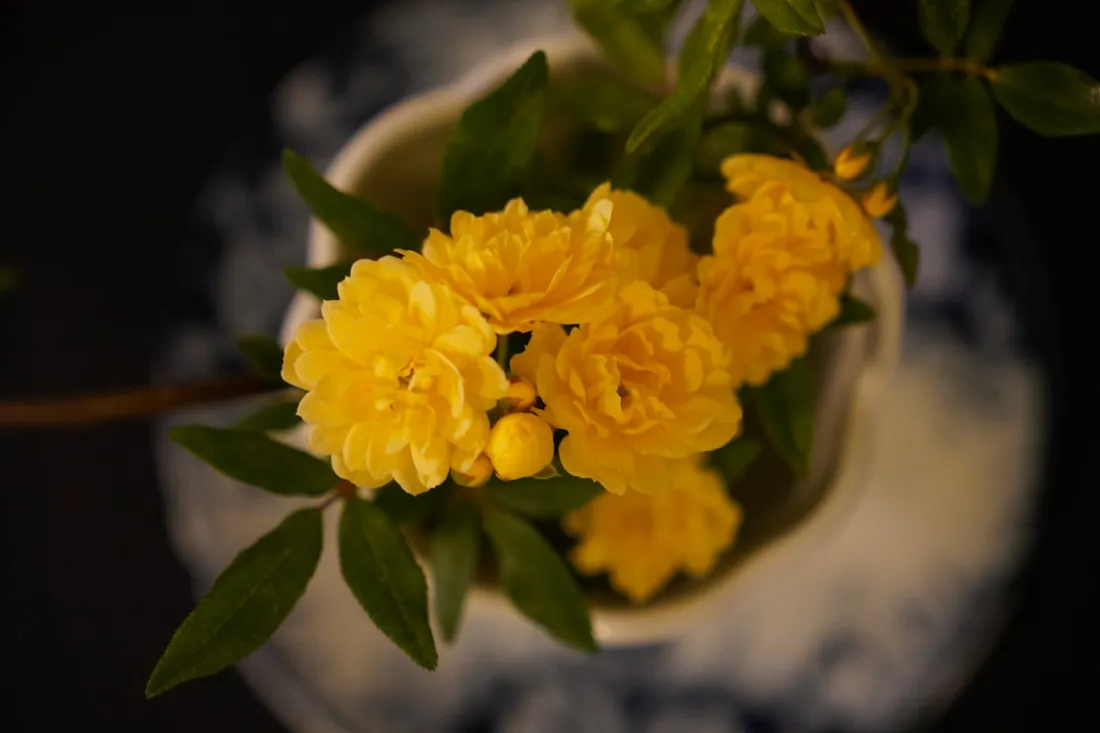
Last spring I hosted a dinner on the equinox — six people, a pot of white bean soup, and a table that had absolutely nothing to do with Easter. No dyed eggs. No ceramic bunnies. No pastel anything. Just branches from the front yard, linen, and candles. Three different guests texted me afterward asking for the table “recipe,” which told me two things: people are hungry for spring tables that don’t look like a holiday craft project, and most people don’t realize how little you actually need to pull one off.
Why Every Easter Table Looks Like a Craft Store Exploded
Go ahead — search “Easter tablescape” on Pinterest right now. I’ll wait. You’re going to see the same table repeated roughly four hundred times: a white or cream runner, pastel eggs in a bowl, one or two ceramic bunnies, some form of forced forsythia, and a color palette that can only be described as “baby shower.” These are the most-saved, most-pinned, most-recreated versions of spring entertaining, and they all share the same problem. They look like they belong to no one.
Here’s the thing about motif-driven tablescapes: the motif does all the work, which means you don’t have to. That sounds like a benefit until you realize it also means your table has zero personality. A ceramic bunny is a ceramic bunny. It doesn’t tell anyone anything about your taste, your home, or how you actually live. It tells them you went to HomeGoods in March.
I’m not anti-Easter. I’m anti-default. The pastel-eggs-and-bunnies table isn’t bad because it’s traditional — it’s bad because it’s automatic. Nobody chose it. They just… arrived at it, because that’s what the seasonal aisle suggested.
The alternative is a spring table built on what spring actually looks like where you live. Not the Hallmark version. The real one — the branches just starting to bud, the green that’s still more grey than emerald, the light that’s finally lasting past dinner. That’s a table worth setting.
Sage, Ecru, and the One Pop Color That Actually Works in March
The palette I keep coming back to every spring is sage, ecru, and undyed linen. That’s it. Three tones that are barely tones — they’re more like textures that happen to have color. Sage reads as green without screaming GREEN. Ecru is warm without being beige. (I lived through my everything-beige phase. My apartment looked like the inside of a bread bowl. I’m not going back.) And undyed linen adds the kind of visual warmth that no pastel can touch, because it’s a material you can feel even with your eyes.
If you want a single pop of color — and you only get one, that’s the rule — go with a muted terracotta or rust. Not coral. Not peach. Not blush. Those are the pastels trying to sneak back in through the side door. A single rust-colored element, like a candle or a small ceramic vessel, grounds the whole table and keeps it from floating into that “everything is the same pale tone” territory that makes a room feel washed out.
This palette works for the same reason Mediterranean-inspired interiors work: it’s pulled from what actually exists in nature, not from a color wheel someone spun in a marketing meeting. March light — at least here in Portland — is soft and cool. Sage and ecru respond to that light instead of fighting it. Pastels in cool light look faded. These tones look intentional.
Can You Really Make a Centerpiece From Your Front Yard?
Yes. I’m not being cute about this — my equinox dinner centerpiece was literally branches. I walked outside with kitchen shears, cut three branches from the ornamental plum in the front yard (it was just starting to bud, tiny green-pink knobs on bare wood), and stuck them in a tall ceramic pitcher I already owned. Total cost: zero dollars. Time: four minutes.
The trick isn’t finding perfect branches. The trick is finding a vessel with enough weight and height to make the branches look intentional rather than sad. A mason jar won’t cut it here — it’ll look like a Pinterest craft gone sideways. What you want is something with presence. A stoneware pitcher. A large, matte ceramic vase. Even a simple glass cylinder vase, the kind you can get at a thrift store for $3, works if it’s tall enough (aim for 10-12 inches minimum).
Beyond branches, here’s what’s probably already growing near you in early spring that looks genuinely good on a table:
- Budding fruit tree branches — apple, cherry, plum, pear. Even before they bloom, the bare wood with tight buds has this architectural quality that no florist arrangement can replicate.
- Eucalyptus — if you’re in a climate where it grows wild, grab it. If not, a bunch from Trader Joe’s is $3-4 and lasts two full weeks.
- Rosemary sprigs — laid directly on the table or across a plate. The smell alone changes the entire experience of sitting down. You catch it every time you reach for your glass.
- Moss — yes, actual moss. Pulled from rocks or the base of trees. Laid along the center of the table on a simple wooden board, it becomes the kind of centerpiece that makes people lean in and touch it. Which is exactly what a good table should do.
One thing I’d skip: wildflowers. I know, I know. But most early-spring wildflowers are small and delicate and disappear visually on a table with any kind of competing element. They’re beautiful in a tiny bud vase on a windowsill. On a dinner table they just look like you forgot to finish.
The Taper Problem (And the $9 IKEA Solution)
Candles are doing about 60% of the work on any evening table, and most people either overspend on them or buy the wrong ones entirely. Here’s the hierarchy:
Taper candles are what you want for a dinner table. Not pillars, not votives, not tea lights scattered like you’re setting up for a séance. Tapers. They add height, they cast light upward (which is flattering to faces and food — this is a real thing, not vanity), and they create rhythm when you use multiples.
The problem is that nice taper candles can cost $15-25 for a pair, and you need at least four for a table of six. That’s potentially $50 in candles for one dinner. Absolutely not.
IKEA’s JUBLA tapers are $4.99 for a pack of eight. Unscented, clean-burning, available in white and ivory. For a spring table, go with ivory — white tapers on a light table look clinical, and ivory picks up the warmth of candlelight in a way that actually matters once the sun goes down. You can buy two packs for under $10 and have enough candles for multiple dinners through April. That’s the whole solution.
For holders, you don’t need to match. In fact, please don’t match. A mix of brass, ceramic, and clear glass taper holders — different heights, different textures — gives the table that “collected over time” quality that makes a space feel like a real home instead of a catalog shoot. I’ve got two brass holders from an estate sale ($4 each), one ceramic one Danny’s mom made in the ’90s (priceless, obviously), and two simple clear glass ones from Target’s Threshold line ($5 each). Together they look completely intentional. They were not.
Why Linen Napkins Change the Whole Room — Not Just the Table
I’ll die on this hill: linen napkins are the single highest-impact, lowest-cost upgrade you can make to any table setting. Not linen-look. Not cotton-linen blend. Linen. The real stuff, the kind that feels slightly rough when it’s new and softens into something extraordinary after a few washes. The kind that wrinkles and doesn’t apologize for it.
Paper napkins make a table feel disposable. Cotton napkins are fine but forgettable. Linen napkins — crumpled loosely, not folded into origami — make the whole table feel like something someone cared about. They add texture you can actually feel when you pick them up. That slight weight, that particular rumple, the way they drape over the edge of a plate instead of sitting there stiffly. It’s a sensory thing as much as a visual one.
H&M Home sells a two-pack of washed linen napkins for about $13. They come in a sage green that’s perfect for this palette. Target’s Threshold line has them too, around $5 each. Or you can go to a fabric store, buy a yard of medium-weight linen for $15-20, and cut it into four generous napkins without even hemming — the raw edge actually looks better for this kind of table. (I did this. They fray slightly after washing. It’s a feature, not a flaw.)
If you’ve been thinking about the broader spring refresh for your home, napkins are the place to start. They migrate. Once you own nice linen napkins, they show up at breakfast, they end up as props when you’re styling a shelf, they become the baseline standard that makes you quietly dissatisfied with paper towels forever. You’ve been warned.
The Full Setup: Three Budget Levels, One Table
Here’s the exact table from my equinox dinner, broken into three budget tiers so you can pick your entry point. Same look, same vibe, different price tags.
The Foraged Table ($15-25)
- Branches or greenery from your yard (free)
- A vessel you already own — pitcher, vase, large jar ($0)
- IKEA JUBLA taper candles, 2 packs ($10)
- Holders you already own or thrift ($0-5)
- DIY raw-edge linen napkins, 1 yard of fabric ($15-20) or H&M Home linen napkins in sage ($13)
- Plates and glasses you already have
This is the version I actually used. The total was around $20 because I already had holders and a vessel. The table looked like it cost ten times that, and I’m not exaggerating — one of the guests literally asked if I’d hired someone to set it. (I had not. I was still in my socks.)
The Curated Table ($50-75)
Everything above, plus:
- A linen table runner in oatmeal or natural — H&M Home ($20) or Target Threshold ($18)
- One small ceramic vessel in terracotta or rust for that pop of warmth — CB2 has a few in the $12-18 range
- Eucalyptus bunches from Trader Joe’s to supplement foraged branches ($4-8)
- Cloth napkin rings — brass or wood, vintage if you can find them ($10-15 for a set)
The Investment Table ($100-150)
Everything above, plus:
- Stoneware dinner plates in a matte cream or warm white — the East Fork Everyday Bowl ($38 each, so this is a “buy two and mix with what you have” situation, not a full set) or Target’s Threshold stoneware plates ($6 each for something surprisingly close)
- Handmade ceramic taper holders from Schoolhouse or Etsy ($15-25 each)
- Dried grasses or pampas arranged alongside fresh branches for height variation ($10-15 from a local florist or dried flower vendor)
The Scandinavian approach to tablescaping — that idea that the table should feel calm and functional and a little bit spare — is basically what we’re doing here at every price point. If you’ve ever looked at a Scandinavian-style living room and thought that’s what I want my home to feel like, you already understand this table. It’s that same principle applied to a place setting: enough to feel considered, not so much that it feels performed.
Keeping It Fresh Through April Without Starting Over
The best thing about a texture-and-botanical table is that it evolves on its own. Those budding branches you cut in early March? By mid-March they’ll have opened slightly. By early April, depending on your climate, they might actually bloom. You’re not maintaining a static display — you’re watching spring happen on your table in real time.
Swap the branches every week or two as whatever’s growing outside progresses. Early March: bare branches with buds. Mid-March: the first green leaves. Late March: blossoms if you’re lucky. April: fuller branches, heavier greenery, maybe some herbs from the garden if you’ve started planting. The vessel stays. The candles stay. The napkins stay. Only the living material changes, and it changes because it’s alive, not because you decided it was time to redecorate.
If the moss starts to dry out (it will, after about a week indoors), mist it lightly with water in a spray bottle. Or let it dry — dried moss has a completely different texture, more silvery-green, and that’s its own kind of beautiful. Not everything has to stay perfect to stay good.
One more thing: this table works for every spring occasion, not just Easter. Equinox dinner, birthday, random Tuesday when you want to eat at the table instead of the couch, Mother’s Day brunch — none of it requires a motif swap because none of it relied on a motif in the first place. You built a table that looks like your home in spring. That doesn’t expire.
The ceramic bunnies do.